At a Glance
- Best months: October – April
- Altitude: 466m above sea level
- Medina listed: UNESCO World Heritage
- Main square: Djemaa el-Fna
- Currency: Moroccan Dirham (MAD)
- Languages: Arabic, Amazigh, French
- Half-day tours: from 3 hours
- Full-day tours: 7–9 hours
Marrakech does not ease you in gently. From the moment you step beyond the rose-pink ramparts of the old medina, the city moves at a pace and frequency all its own — a sensory overload of spice, colour, sound and history that will disorient and delight you in roughly equal measure.
The Red City is Morocco's most visited destination and it is easy to see why. Few cities on earth pack so much within such a compact area: a UNESCO-listed medieval medina, over a thousand years of Islamic architecture, the most extraordinary public square in North Africa, and a souks district that sells everything from hand-beaten copper to fresh argan oil.
The challenge is not finding things to do in Marrakech — it is knowing where to focus. Our guided excursions give you expert context, skip the navigation frustration, and unlock parts of the medina most independent visitors never find. Here is our complete guide to the best Marrakech excursions and day trips in 2025.
The Essential Landmarks
Marrakech has a concentration of remarkable historic sites within a walkable area. These are the unmissable highlights — each one a full destination in its own right, each one enriched enormously by expert local commentary.
Djemaa el-Fna — The Living Square
The pulsing heart of Marrakech. By day a mellow space of orange juice vendors and henna artists; by dusk it transforms into something extraordinary — storytellers, acrobats, snake charmers, Gnawa musicians and 100 food stalls ignite simultaneously. UNESCO recognises it as an Intangible Cultural Heritage of Humanity. No photograph prepares you for the reality of it at 8pm.
Visit at dusk for the full transformationKoutoubia Mosque — The Minaret of Marrakech
The 70-metre minaret of the Koutoubia is Marrakech's most recognisable landmark and the architectural template for the Giralda in Seville and the Hassan Tower in Rabat. Built in the 12th century under the Almohad dynasty, it dominates the Marrakech skyline and serves as the city's orientation point. Non-Muslims may not enter but the gardens surrounding it are peaceful and open to all.
Best photographed from the Jemaa el-Fna side at sunsetBahia Palace — Zellige, Cedar and Rose Gardens
Built in the late 19th century by the Grand Vizier Si Moussa and his son Ba Ahmed, Bahia Palace is one of the finest examples of Moroccan and Andalusian architecture in existence. Eight hectares of rooms, courtyards and gardens covered in hand-cut zellige tilework, carved stucco and painted cedar ceilings. The name means "brilliance" — it earns it.
Arrive early — it gets crowded by 10amBadi Palace — Magnificent Ruins
Once described as one of the wonders of the world, the 16th-century Badi Palace was built by Sultan Ahmed al-Mansour from the ransoms paid after the Battle of the Three Kings. Plundered in 1696 by Moulay Ismail, only glorious ruins survive — vast sunken gardens, vast reflecting pools and nesting storks. A poetic contrast to the intact grandeur of Bahia.
Combine with the nearby Mellah (Jewish quarter)The Souks — A City Within a City
North of Djemaa el-Fna lies an ancient network of specialised market streets that has been trading continuously for over 900 years. Each alley has a trade: leather tanners, spice merchants, carpet weavers, lantern makers, coppersmiths. Without a guide, the souks are a labyrinth in which getting lost is guaranteed and getting found is difficult. With one, they become legible and extraordinary.
A local guide transforms the souk experience completelyMajorelle Garden — Yves Saint Laurent's Blue Oasis
Created by French painter Jacques Majorelle in the 1920s and later restored by Yves Saint Laurent, these botanical gardens are a serene counterpoint to medina intensity. Hundreds of cacti and exotic plants, electric-blue buildings, and a small Berber museum. One of the most-visited sites in Morocco — book ahead to avoid queues.
Book tickets in advance online; sells out on busy days"In the Marrakech medina, getting lost is not a failure of navigation — it is the entire point. The best discoveries happen in the alleys you were not trying to find."
Half-Day vs Full-Day Tours
Sahara Trails offers both half-day and full-day Marrakech excursions, designed around your available time and interests. Here is what each typically covers:
Insider Tips for Marrakech
Marrakech rewards preparation. These are the practical insights our guides share on every tour — small adjustments that make a large difference to your experience.
The medina is dramatically quieter before 9am. Morning is the best time for Bahia Palace, the Ben Youssef Madrasa, and the souks. Djemaa el-Fna is best at dusk.
The medina has over 1,500 alleys and offline maps are essential. Even experienced travellers get turned around. A guide for your first half-day saves hours of frustration.
Bargaining is expected and is part of the culture. Start at roughly 40–50% of the opening price and work from there. Never be rude — the process is a social ritual.
Marrakech is a conservative Muslim city. Both men and women should cover shoulders and knees when in the medina — particularly near mosques and in the souks.
Cafés with rooftop terraces overlooking Djemaa el-Fna are one of the great Marrakech pleasures. Café de France and Café Glacier have the best views. Order mint tea and take your time.
The fresh-squeezed orange juice stalls on Djemaa el-Fna are iconic and excellent. A large glass costs around 4 MAD (~€0.40). Go to the stalls on the square itself, not the nearby cafés.
Summer temperatures regularly exceed 38°C. Schedule heavy walking for morning and early evening; take the midday hours in a riad courtyard or pool. Always carry water.
Ask before photographing people — particularly in the souks and on Djemaa el-Fna. Many performers and traders expect a small tip for photos. Respect goes a long way.
Day Trips from Marrakech
Marrakech's position at the foot of the High Atlas makes it an ideal base for some of Morocco's most spectacular scenery and culture. All of the following can be done as a private day trip arranged through Sahara Trails:
A river valley cutting into the High Atlas, lined with Berber villages, waterfalls and terraced gardens. A gentle introduction to Morocco's mountain culture.
Morocco's highest waterfalls cascade 110 metres into a green gorge. Barbary macaques roam the surrounding olive groves. Stunning at any time of year.
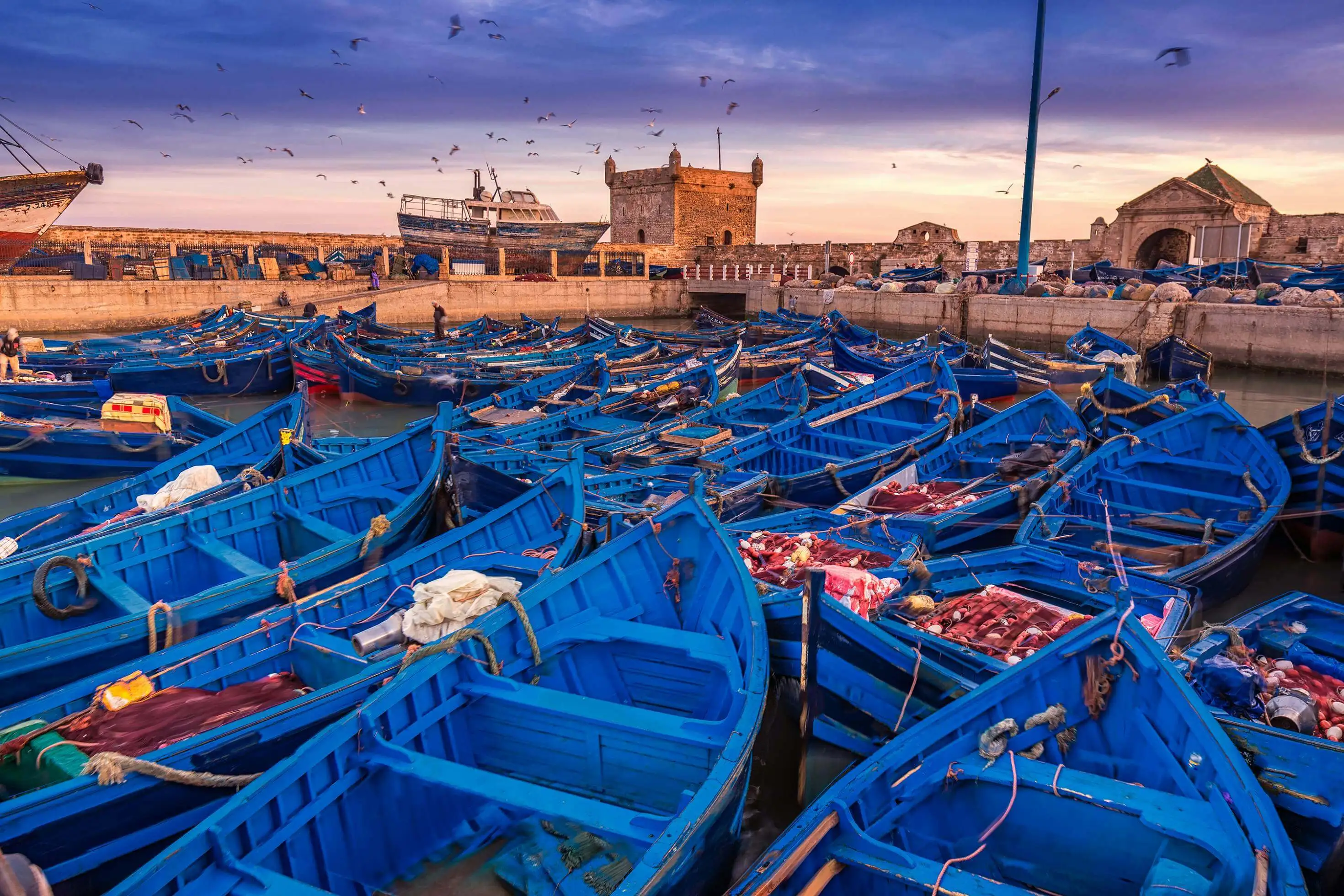
A walled Atlantic port city of whitewashed blue streets, fresh seafood and a medina designated UNESCO World Heritage. A perfect antidote to Marrakech's intensity.
The most photographed kasbah in Morocco — a UNESCO-listed fortified village of sun-dried earth rising from the pre-Saharan plain. Filming location for Game of Thrones and Gladiator.
The gateway to the Draa Valley and the Sahara. Visit the famous Atlas Film Studios and the Taourirt Kasbah. Often combined with Ait Benhaddou for a full desert day.
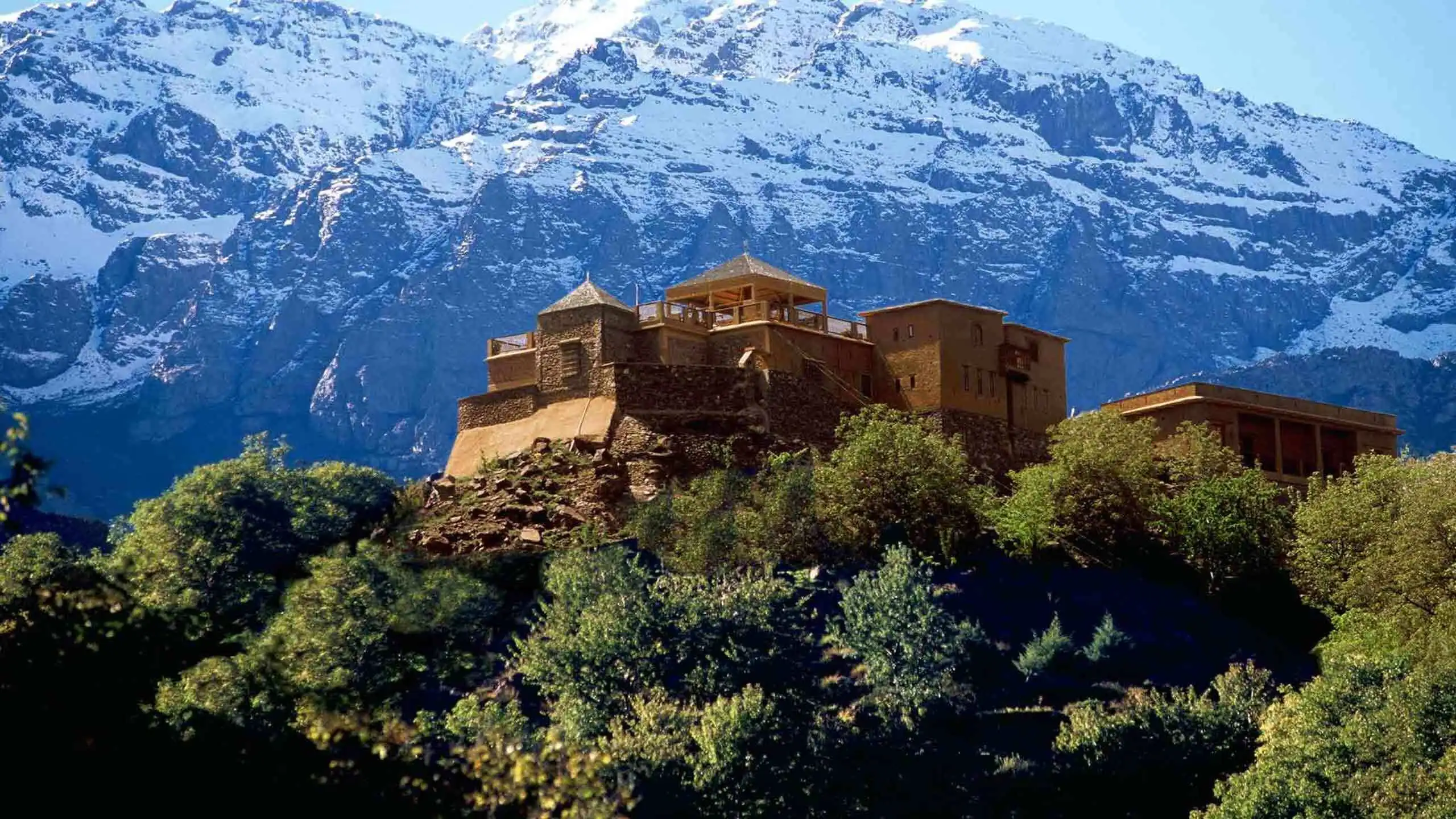
The base village for Jbel Toubkal treks, set at 1,740 metres. Day walks through walnut orchards to Berber villages with sweeping Atlas views — no summit attempt required.
Frequently Asked Questions
How many days do I need to explore Marrakech properly? +
Two full days covers the essential highlights at a comfortable pace — the medina, Djemaa el-Fna, the main palaces and a souk walk. Three days allows you to add a day trip to the Atlas or Essaouira without rushing. If you have only one day, our full-day guided tour is the most efficient way to cover the maximum ground.
Is it better to explore Marrakech with a guide or independently? +
The medina is a genuine labyrinth of over 1,500 alleys — first-time visitors almost universally get lost. A local guide unlocks hidden corners, provides essential historical context, helps navigate the souks without the stress of unsolicited "help", and gains access to private areas. We strongly recommend at least a half-day guided tour on your first day; after that you can explore independently with much more confidence.
What is the best time of day to visit Djemaa el-Fna? +
The square changes completely through the day. Morning is peaceful and quiet — a good time for a rooftop coffee looking down at it. Late afternoon the performers and musicians begin to arrive. At dusk, around 6–7pm, the food stalls ignite and the square becomes one of the great street spectacles anywhere in the world. If you can, visit at two different times to see both faces of it.
What day trips can I do from Marrakech? +
The most popular day trips from Marrakech are: Ourika Valley (1 hour), Imlil and the Atlas foothills (1.5 hours), Ouzoud Waterfalls (2.5 hours), Essaouira (2.5 hours), Ouarzazate and the Draa Valley (3 hours), and the Ait Benhaddou kasbah (3 hours). Sahara Trails arranges private driver-guide day trips to all of these destinations.
Is Marrakech safe for solo travellers and women travelling alone? +
Marrakech is generally very safe for tourists and the medina is well-patrolled. Petty hassle from touts can be persistent in the souks and around Djemaa el-Fna — a confident, purposeful walk and polite but firm "no, thank you" is usually sufficient. Solo women should be aware that harassment can occur in quieter alleys after dark; exploring with a guide or in company is advisable for the first visit. Dressing modestly helps significantly.